1 Chapter


Jagruti Mokate
What You’ll Gain from an ISO 27001 Lead Auditor Training Course
What You’ll Gain from an ISO 27001 Lead Auditor Training Course In today’s world, data breaches, cyber threats, and regulatory requirements make information security a top priority. Organizations that handle sensitive data must implement robust security measures to protect it. This is where ISO 27001 comes in—a globally recognized standard that provides a framework for establishing, implementing, maintaining, and continuously improving an Information Security Management System (ISMS). The ISO 27001 Lead Auditor Training Course is designed to equip professionals with the knowledge and skills required to audit and certify an ISMS, enabling organizations to achieve compliance and demonstrate their commitment to information security. If you’re considering a career in information security auditing or want to contribute to your organization's security initiatives, here’s what you’ll gain from this training course: 1. Comprehensive Understanding of ISO 27001 Requirements The ISO 27001 Lead Auditor Course offers a thorough understanding of ISO 27001’s requirements and controls. You’ll learn how to interpret each clause of the standard and understand how to apply these requirements in real-world scenarios. This knowledge is essential for anyone involved in information security, as ISO 27001 sets a robust baseline for managing security risks and safeguarding information assets. 2. Proficiency in Audit Planning and Execution One of the most critical skills you’ll gain is learning how to plan, conduct, and manage audits for both internal and external purposes. You’ll be trained on the best practices for evidence gathering, interviewing staff, and documenting findings. Additionally, you’ll gain insights into audit tools and techniques, which are invaluable for ensuring your audits are both efficient and thorough. These skills not only enhance your auditing capabilities but also prepare you to identify non-conformities and make recommendations that add real value to an organization’s ISMS. 3. Expertise in Risk-Based Auditing ISO 27001 places a strong emphasis on a risk-based approach, which means focusing on areas where security issues could have the greatest impact. The training will prepare you to carry out risk-based audits, targeting high-risk areas and ensuring that an organization's security controls are robust enough to mitigate these risks. Understanding risk-based auditing techniques is essential for Lead Auditors, as it allows them to prioritize efforts where they matter most and ensure that critical areas are effectively managed. 4. Ability to Provide Actionable Improvement Recommendations An essential part of the auditor’s role is not just identifying issues but also proposing meaningful corrective actions. Through the ISO 27001 Lead Auditor Course, you’ll learn how to give practical recommendations for improvement. This capability is particularly valuable as it helps organizations continuously strengthen their ISMS, reduce vulnerabilities, and address emerging threats proactively. 5. Familiarity with ISO 19011 & ISO/IEC 17021 Compliance Professional auditors must be well-versed in ISO 19011 (Guidelines for Auditing Management Systems) and ISO/IEC 17021 (Requirements for Bodies Providing Audit and Certification of Management Systems). These standards provide guidance on best practices for conducting audits and the qualifications required for professional auditors. The training covers these standards, ensuring that you understand the protocols for conducting credible and compliant audits, ultimately making you a more reliable and trusted auditor. 6. Certification Preparation and Career Advancement The ISO 27001 Lead Auditor certification is recognized worldwide, demonstrating your expertise and commitment to information security. This certification opens doors to career opportunities as organizations, government agencies, and audit firms seek certified professionals who can help them achieve compliance and maintain their security standards. The training is a key step in preparing for the certification exam and ensuring that you’re fully equipped to meet industry expectations. 7. Enhanced Security Posture for Your Organization Beyond personal benefits, completing the ISO 27001 Lead Auditor Course empowers you to contribute directly to improving your organization’s security posture. You’ll be equipped to assess an organization’s ISMS, helping to identify vulnerabilities and ensure that security controls are functioning effectively. By implementing the ISO 27001 standard, you’ll play a vital role in building organizational resilience against data breaches and cyber threats, providing peace of mind for stakeholders, clients, and customers alike. Why ISO 27001 Lead Auditor Training Matters Now More Than Ever The demand for qualified information security auditors continues to grow as businesses face new challenges in a digital and data-driven world. Completing the ISO 27001 Lead Auditor Training Course not only provides you with valuable skills but also positions you as a leader in information security, capable of guiding organizations towards stronger security practices. If you’re ready to make a meaningful impact on information security, consider enrolling in the ISO 27001 Lead Auditor Training Course. The knowledge and certification you gain will serve as a testament to your dedication to protecting data and supporting organizations in their security journey. One can also read the blog: ISO 27001 Lead Auditor Training: Learn How to Succeed
Jagruti Mokate

Understanding the Cost of ISO 27001 Certification
Understanding the Cost of ISO 27001 Certification Why ISO 27001 Certification Matters ISO 27001 certification helps organizations build strong information security systems. In 2024, the cost of this certification depends on several factors, such as the size of the organization, location, complexity of operations, and the certification body chosen. Costs vary between countries, with pricing differences seen in India and other regions worldwide. This blog explains the factors influencing ISO 27001 certification costs and what organizations can expect when pursuing it. What is ISO 27001 Certification? ISO 27001 is a globally recognized standard for managing information security, developed by ISO (International Organization for Standardization) and IEC (International Electrotechnical Commission). The certification ensures organizations: • Protect sensitive information. • Maintain confidentiality and integrity. • Prevent unauthorized access and breaches. Achieving ISO 27001 certification shows that a company follows the best security practices, giving clients and partners confidence in its data protection standards. How Much Does ISO 27001 Certification Cost? The cost of ISO 27001 certification in 2024 can range from $15,000 to over $100,000, depending on the size and complexity of the organization. Below are the main costs involved: 1. Training Costs o ISO 27001 Lead Auditor Training: $500–$2,000 per person. 2. Audit Fees o External Audits by Certification Bodies: $5,000–$15,000. 3. Consulting Services o Consulting fees: $10,000–$50,000, depending on the support required. ISO 27001 Certification Costs in India Certification costs in India are generally lower compared to the US or Europe. Here's a breakdown for medium-sized organizations: • Average project cost: ₹3,00,000 to ₹15,00,000 ($3,600 to $18,000). • Small businesses: ₹4,00,000 to ₹8,00,000. • Medium organizations: ₹12,00,000 to ₹20,00,000. • Large organizations: ₹41,00,000 to ₹82,00,000. For individuals pursuing ISO 27001 Lead Auditor certification in India: • Course fees: ₹30,000–₹50,000 ($360–$600). • Exam fees: ₹15,000–₹25,000 ($180–$300). Key Factors Affecting Certification Costs in 2024 1. Scope of the ISMS o A smaller scope reduces costs but limits certification coverage. o A broader scope increases costs due to more audits and resources needed. 2. Size and Complexity of the Organization o Larger companies with complex systems or multiple locations incur higher costs. 3. Geographical Location o Costs are higher in regions like North America and Europe compared to India. 4. Consulting vs. In-House Training o Hiring consultants is costly. Training in-house staff as lead auditors can reduce long-term expenses. Additional Costs 1. Annual Surveillance Audits o To maintain certification, organizations must undergo yearly audits, costing $3,000–$7,000. 2. Training and Skill Updates o Regular updates for employees cost $500–$1,000 per person per year. 3. Compliance Software o Tools for monitoring and compliance cost $1,000–$10,000 annually. Is ISO 27001 Certification Worth It? Though expensive initially, the certification offers these benefits: • Reduced Risk: Protecting data prevents costly breaches. • Enhanced Customer Trust: Certification builds confidence and opens new markets. • Lower Audit Costs: Training employees as auditors reduces the need for external audits. Conclusion ISO 27001 certification is a smart investment for companies aiming to strengthen data security. In countries like India, cost-effective options make certification more affordable. Training employees as lead auditors and using compliance software can further reduce expenses while ensuring a robust security framework. To explore ISO 27001 Lead Auditor certification costs and training, visit NovelVista's ISO 27001 Certification course page.
Jagruti Mokate

What is ISO 20000 Lead Auditor Certification and Who Should Pursue It?
What is ISO 20000 Lead Auditor Certification and Who Should Pursue It? In today’s digital-first world, delivering quality IT services is no longer optional — it's a business imperative. Organizations across industries rely heavily on structured IT service management (ITSM) frameworks to ensure efficiency, reliability, and customer satisfaction. This is where ISO/IEC 20000 comes into the picture — the international standard for IT service management. But how do organizations ensure they are truly aligned with this standard? That’s where ISO 20000 Lead Auditors step in — skilled professionals trained to evaluate and audit ITSM systems for compliance with ISO 20000. If you're aiming to build a career in IT governance, compliance, or service quality management, the ISO 20000 Lead Auditor Certification can be your next best move. What is ISO/IEC 20000? ISO/IEC 20000 is the global standard for IT service management. It defines the requirements for establishing, implementing, maintaining, and continually improving a service management system (SMS). The goal is to ensure that IT services are aligned with business needs and delivered effectively. It covers everything from incident and problem management to capacity, availability, and service continuity planning. What is ISO 20000 Lead Auditor Certification? The ISO 20000 Lead Auditor Certification is a professional qualification that equips individuals with the knowledge and skills needed to: • Conduct audits of IT service management systems based on ISO 20000 • Lead audit teams and manage the audit process end-to-end • Ensure an organization’s SMS meets international best practices and compliance standards • Provide actionable insights and recommendations for continual improvement Certified Lead Auditors play a crucial role in helping businesses gain or maintain ISO 20000 certification, reduce risks, and improve service delivery. Key Topics Covered in the Training During an ISO 20000 Lead Auditor course, you will typically learn: • Fundamentals of ITSM and ISO/IEC 20000 structure • Principles, procedures, and techniques of auditing • Roles and responsibilities of a Lead Auditor • How to plan, conduct, report, and follow up on audits • Audit evidence, findings, and nonconformity reporting • Techniques for managing audit teams and stakeholders Most courses include interactive sessions, real-life scenarios, and a final examination that tests both theoretical and practical understanding. Who Should Pursue This Certification? The ISO 20000 Lead Auditor Training certification is ideal for: ✅ IT Service Management Professionals If you're already working in ITSM and want to broaden your scope to include auditing, this certification adds a valuable dimension to your profile. ✅ Quality Managers & Consultants Professionals involved in process improvement, IT governance, or ITSM consulting can use this certification to validate their skills and offer auditing services. ✅ Internal Auditors If you’re tasked with internal compliance audits or preparing your organization for external certification, this training will sharpen your techniques and align you with global best practices. ✅ Information Security & Risk Managers Those responsible for IT governance or working with other ISO standards like ISO 27001 can leverage this certification to understand ITSM compliance holistically. ✅ Aspiring Lead Auditors Anyone looking to specialize in auditing as a career path, particularly within IT service management, will find this a strong foundational and advanced qualification. Benefits of Becoming an ISO 20000 Lead Auditor • 🔍 Gain In-Demand Skills in auditing and ITSM • 🌍 Work Globally – ISO standards are recognized internationally • 📈 Advance Your Career – Qualify for higher roles in compliance, auditing, or IT governance • 💼 Add Credibility – Stand out in a competitive job market with a globally recognized certification • 🤝 Consult & Train Others – Many Lead Auditors also become consultants and trainers in the ISO domain Conclusion The ISO 20000 Lead Auditor Certification isn’t just about checking compliance — it’s about driving real improvements in how IT services are delivered and managed. Whether you're an IT professional, a consultant, or someone looking to pivot into IT governance and compliance, this certification opens doors to high-value roles around the globe. Are you ready to become a catalyst for quality in IT service delivery? Explore more: https://www.novelvista.com/iso-20000-lead-auditor-certification
Jagruti Mokate
What is ISO 22301?
A Simple Guide to Keeping Your Business Running During Disruptions
Jagruti Mokate

How AI is Changing the Role of ISO 27001 Lead Auditors
How AI is Changing the Role of ISO 27001 Lead Auditors The role of an ISO 27001 Lead Auditor has always been rooted in diligence, deep analysis, and meticulous evaluation. But as Artificial Intelligence (AI) reshapes industries across the board, it's also quietly transforming the way ISO 27001 Lead Auditors operate. What was once a manual, paper-heavy role is evolving into a dynamic, tech-powered responsibility that requires auditors to adapt fast. In this blog, we explore how AI is changing the landscape for ISO 27001 Lead Auditors and what this means for the future of information security audits. 1. Faster and Smarter Risk Assessments AI algorithms are helping organizations identify risks more accurately and quickly by analyzing large volumes of structured and unstructured data. Instead of relying solely on interviews, manual document reviews, and spreadsheets, auditors can now use AI tools that flag anomalies and trends in real-time. 🔍 Impact on Auditors: Lead Auditors must now understand how to interpret AI-generated risk reports and validate the credibility of automated assessments. 2. Automated Evidence Gathering One of the most time-consuming tasks in audits is collecting evidence. AI can streamline this by scanning system logs, emails, and access records to automatically gather and categorize evidence needed for compliance. 🤖 Example: AI bots can extract access control logs and match them with policy requirements, making it easier to validate adherence to ISO 27001 clauses. 3. Predictive Analytics for Better Decision-Making AI tools are capable of predicting potential security breaches based on patterns of behavior or previous incidents. These insights can be invaluable for auditors during the risk treatment phase. 📊 Impact on Auditors: Rather than reacting to past events, auditors can now guide organizations on how to proactively mitigate risks before they materialize. 4. Continuous Monitoring Over Periodic Audits Traditional audits are usually periodic, but AI enables continuous monitoring of systems and controls. This allows for real-time compliance checking instead of waiting for the next audit cycle. 🔄 Shift in Role: Auditors are transitioning from one-time evaluators to ongoing compliance partners who interpret continuous data streams and guide real-time adjustments. 5. Enhanced Threat Intelligence AI-powered threat intelligence platforms can detect threats faster and more accurately than manual methods. This adds a new dimension to audits where auditors must assess not just current compliance, but readiness against emerging threats. 🛡️ Pro Tip: Auditors should stay updated on AI-driven threat intelligence tools and incorporate them into their assessment checklists. 6. Improved Document Review with NLP Natural Language Processing (NLP), a branch of AI, can review thousands of pages of documentation—like security policies, procedures, and incident reports—much faster than humans, identifying inconsistencies or missing elements. 📄 Time-Saver: Auditors can rely on AI to handle repetitive document reviews, freeing them to focus on high-value analysis and decision-making. 7. Ethical & Data Privacy Considerations As AI gets involved in audits, there’s a growing need to ensure that these tools themselves comply with privacy regulations like GDPR. ISO 27001 Lead Auditors now have an added responsibility of auditing AI systems for ethical use and data integrity. ⚖️ New Skill Requirement: Understanding ethical AI, data bias, and privacy implications becomes part of the auditor’s toolkit. Final Thoughts: Embracing the AI-Enhanced Auditor Role AI is not replacing ISO 27001 Lead Auditors who has pursued ISO 27001 Certification by undergoing ISO 27001 Training —it’s elevating their role. By automating routine tasks and providing deeper insights, AI allows auditors to focus more on strategic evaluation, human behavior, and risk forecasting. To stay ahead, Lead Auditors should: • Get familiar with AI tools relevant to information security. • Develop skills in data interpretation and automation validation. • Stay updated on evolving ethical and regulatory frameworks related to AI. In short, the future ISO 27001 Lead Auditor is not just an expert in compliance—but also a savvy navigator of technology and intelligence.
Jagruti Mokate

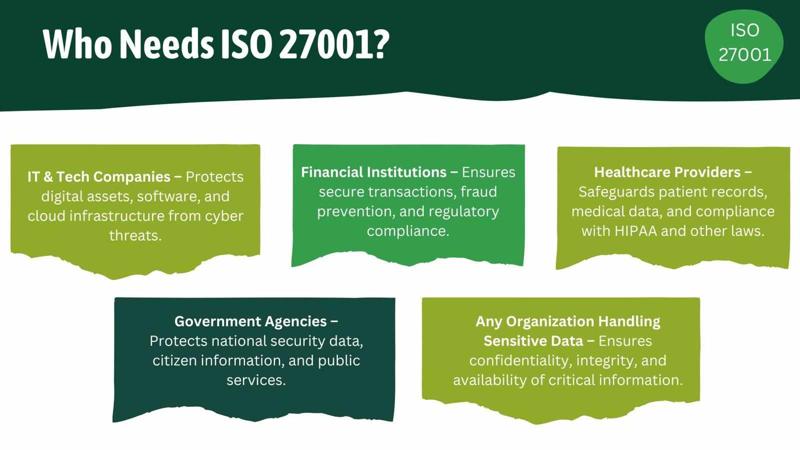
Who Needs ISO 27001?
With cyberattacks on the rise and data privacy regulations becoming stricter, now is the time to invest in ISO 27001 Certification. Whether you’re a startup looking to scale, an enterprise managing complex data, or a government agency safeguarding citizen information, ISO 27001 provides the framework you need to secure your future.
Jagruti Mokate
Who Needs ISO 27001?
Who Needs ISO 27001?
Jagruti Mokate

Understanding the Cost of ISO 27001 Certification
Understanding the Cost of ISO 27001 Certification
Jagruti Mokate
Write a comment ...